
The Susan B. Anthony race, held every August in Sacramento, empowers women by promoting confidence, equity and community, plus giving women the chance to finally break that tape.
Run Outside Online, a website and company dedicated to all things running, found that 49% of girls quit sports by the time they are 14, a rate six times higher than it is for boys. According to the website, this is due to a multitude of reasons including a lack of female role models, negative body image and safety concerns.
Radius, a research company focused on U.S. demographic reports, did a survey of women runners and discovered that 60% of endurance races cater to men more than women. Women-only races are able to curb this inequality by focusing on creating a supportive community for women runners and establishing confidence in female runners.
This doesn’t mean that co-ed races can’t be more equitable, though. Ultra-runner Sophie Power set up a campaign two years ago titled SHEraces, a program aimed at more inclusive racing treatment for women. SHEraces discovered and fought to include women’s main priorities in races, including more bathrooms, areas for breastfeeding and more.
These efforts do help to end certain inequalities in runs, but something they are not able to do is give a woman the chance to be the overall winner of a race.
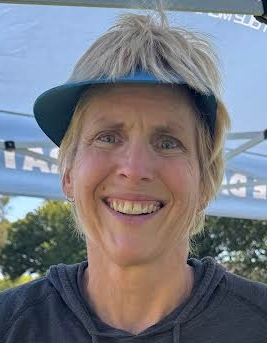
Carol Parise, the director of the Susan B. Anthony race, said the biggest difference in a women-only race is that it gives women a chance to break the tape and earn first place. Statistically, women are 10-12 percent slower than men, which decreases their chance of being the participant who is able to achieve this feat.
“Women train just as hard as men do, but women just don’t get to be first,” Parise said. “Even if they have a tape for women, it’s always the guy who wins the race. They don’t get to have the whole, ‘Hey, it’s me, I’m first.’ ”
For less competitive women, women-only races allow for a less aggressive or daunting crowd, according to race participant and marathon runner Carmen Micsa.
“The beauty of this race is that if you feel like you need to walk a little bit, you’re gonna walk,” Micsa said. “There’s no pressure.”
Regardless of personal fitness level, participating in running events can improve confidence in any runner, something essential to women’s participation in runs such as the Susan B. Anthony event and other co-ed races.
“Running improves confidence and motivation because it’s hard, and even people who love running still know that it’s really, really hard,” participant Allison Cross said. “In the back of my mind, I know that I can do hard things and push through pain. So this race is part of that.”
Running against other women also gives participants a different mindset than they would have if they were racing against men.
“When you’re racing and you see a guy up there, you think, ‘I’m not gonna beat that guy anyway,’ ” Parise said. “You see a woman and you think, ‘OK, I’m going to try and pass them.’ ”
A special element of the Susan B. Anthony race specifically is that the majority of volunteers are men, which can be encouraging to women participants. Cross said she enjoyed seeing all the male volunteers coming out to help and showing their support.
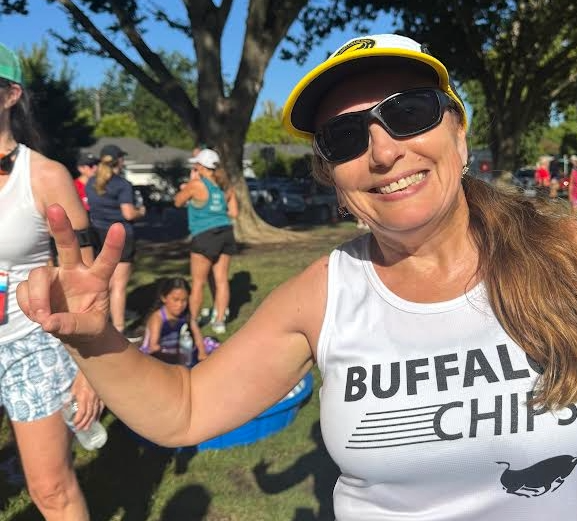
The volunteers facilitating the race are from a Sacramento area running club called Buffalo Chips. It is the largest, as well as oldest, running club in the Sacramento area.
“We are the Buffalo Chips, and we put all these people out here working,” Parise said. “The Buffalo Chips is the main supporter of this race. We put it on. We have the permits.”
Since the race is sponsored by Buffalo Chips, any profit made goes directly back into their program. Parise said the club uses part of the funds to help support their youth running team.
“It’s a really good racing team, and they even go to nationals,” Parise said.
The Buffalo Chips youth team attends the National Youth Championships, which is in Knoxville Tennessee this year.
“So we have a good, strong youth program,” Parise said.
The Buffalo Chips youth team is an example of how the race goes beyond the event itself. It gives back to its community by encouraging women to run, giving them a community to do it with, and helping them feel encouraged and accomplished once they cross that finish line of any race.
As Misca describes the race, in three words: “Women. Kick. Butt.”